Construction Technique Options

Construction Constraints

No ‘traditional’ Motor Mount Tube

  • The aft section of Red Ryder is fully constructed with internal centering rings and stringers. The purpose of the centering rings is to collectively serve as the motor mount.
  • The challenge that this lack of motor mount tube presents is that we will not be able to through mount the fins and secure the fin “tabs” onto the motor mount tube.
  • The current stringer alignment also does not allow us to use the stringers as internal fin tab supports due to the current stringer alignment.
  • It might be possible to cut into specific stringers / slot the stringers to allow for through mounting and thus use the stringers for additional internal fin support – but likely at the cost of structural integrity.

Option A: Airframe Mounted Fins

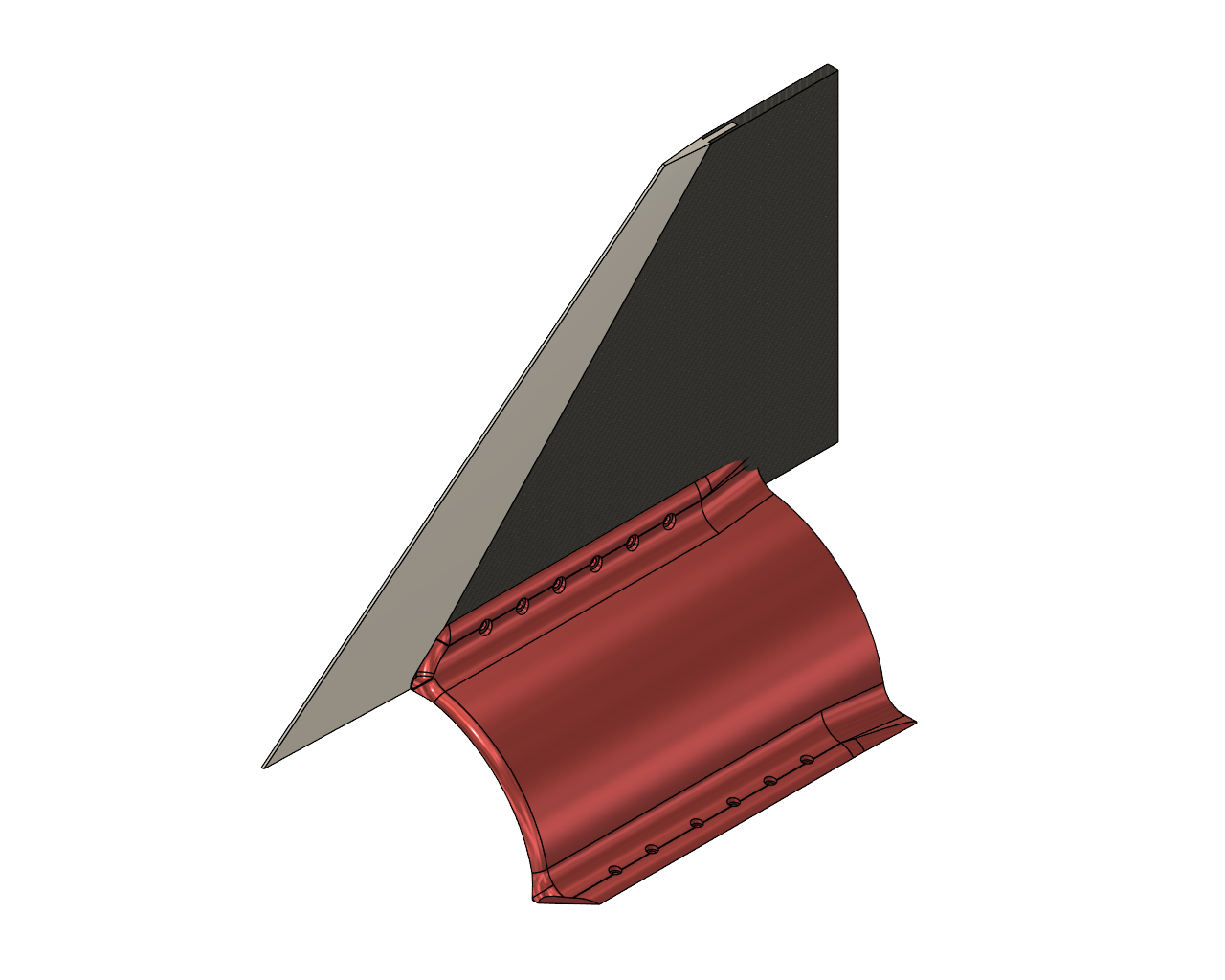
Variant: Airframe mounted and Fillets Only

Description

Fins are directly mounted on the airframe, and the four fins are aligned at 90 degrees

Additional Support / Strength

Filler infused epoxy fillets ONLY

Comments

  • Easiest construction technique.
  • Weakest overall technique.
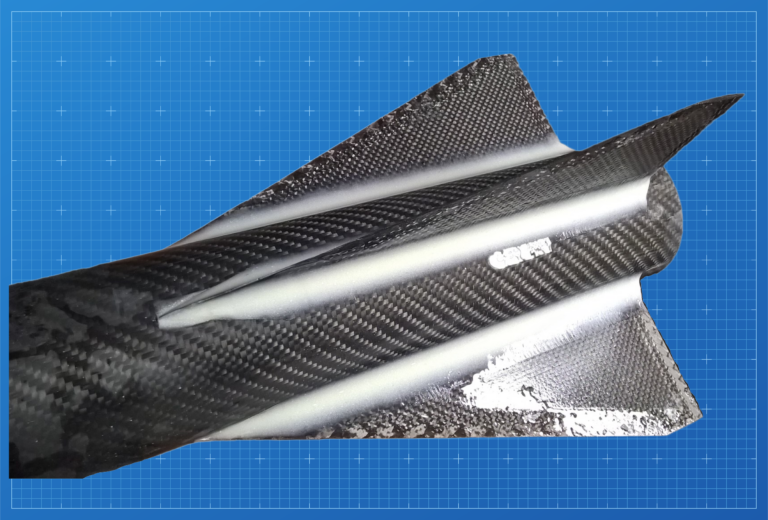
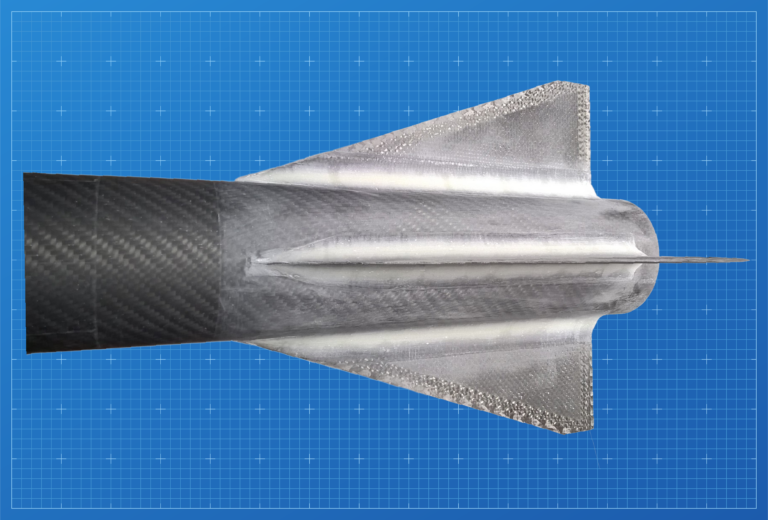
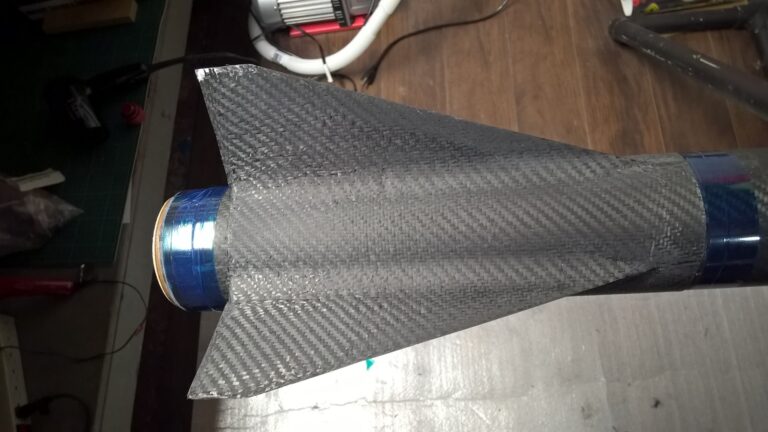
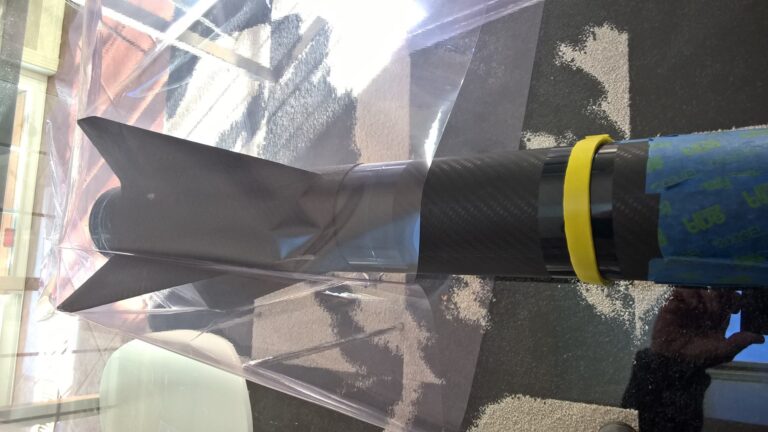
Variant: Full Tip-to-Tip Composite Layup

Description

Fins are directly mounted on airframe and four fins are separated by 90 degrees.

Additional Support / Strength

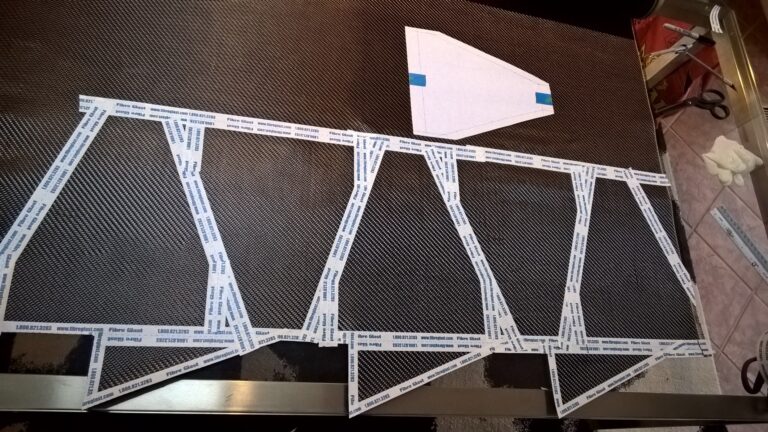
  • Full carbon or fiberglass layers applied in from fin tip to fin tip.
  • Multiple layers are applied – with 2 layers minimum.
  • Fiber orientation is reversed between each layer.

Comments

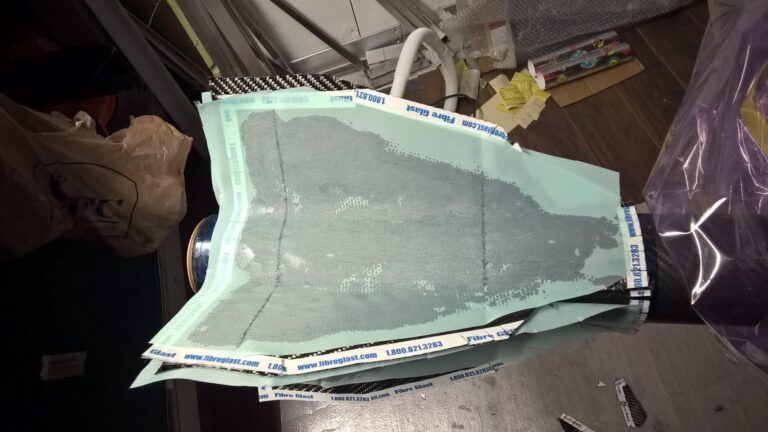
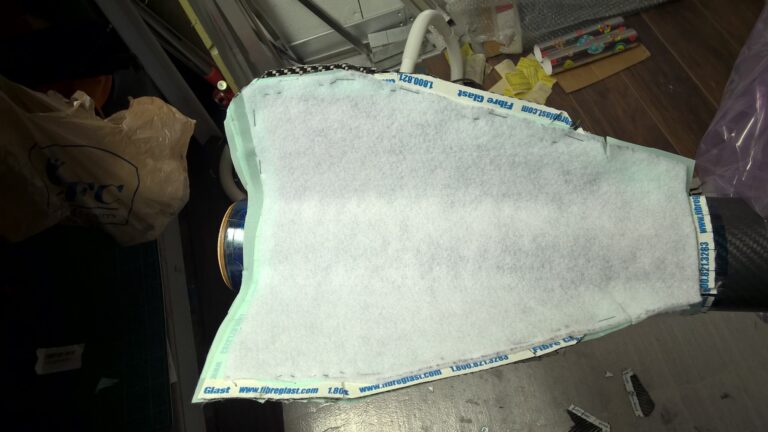
Basic version: ‘no compression’ layup – fiber sheets are epoxy infused and left to cure. For best results adding a layer of peel-ply to reduce epoxy pooling and runs and slightly better surface finish.

Advanced version: full atmospheric compression layup – using vacuum bagging.

Option B: Modular Fin Assembly or ‘Fin Can’

  • The Binder Design and 434 Aerospace fin can / assemblies are pure examples of such modular assemblies.
  • The fin “can” is deconstructed into the four fins and four inter-connecting brackets – with mounting hardware (bolts and bolts and nuts) securing the brackets to the fins.
  • The strength of this design stems from the four brackets that are pulled or tightened around the airframe – this effectively creates a cylinder that is squeezed around the airframe and if done correctly the whole assembly is under radial tension.
  • The most advanced form of the modular assembly is where both the fins and brackets are aluminum.
  • Variants of this modular assembly could include fins that are made from material options as listed in this document.
  • The interconnecting brackets will however always have to be a metal such as aluminum.

Hybrid

Description

Concept here is to use a combination to techniques as well as mix the construction materials together.

Option A:

  • The main fin body is laminated NHC and the leading edge is fully CNC milled and profiled 6061 aluminum.
  • This hybrid fin can then be surface mounted and tip-to-tip layup used for strength

Option B:

  • The main fin body is laminated NHC and the leading edge is fully CNC milled and profiled 6061 aluminum.
  • Interconnecting brackets are then CNC milled and the fins are secured to the airframe in that way.

Strength Notes

Concern with this design is that the aluminum leading edge could sheer away / break at the bonding interface.

Advantages

Best of both worlds – combining the lightweight NHC as the fin core and then strengthening the leading edges with fully profiled aluminum.

Disadvantages

Complex design that will require completely custom CNC work holding to manufacture the leading edges

Weight


Cost


Application

Suitable for all construction techniques